A child can walk into a classroom, read what they can, and never realize that the world is supposed to look sharper. That is the central warning Dr. John Ormando of Ardmore Eye & Optical shared in a September 2026 interview with Main Line Parent. A comprehensive eye exam before kindergarten gives families a baseline before reading, board work, sports, and screens place greater demands on a child's vision.
Children do not know what “blurry” means
Adults recognize blur because they remember seeing clearly. Children do not have that comparison. They may compensate by moving closer, relying on one eye, avoiding detail work, or simply accepting that this is how everything looks. That is why waiting for a child to complain can miss a problem that has already begun affecting school and play.
“The child doesn't notice. There's no baseline for them to compare anything to. They may think everyone sees like that, including their parents.”— Dr. John Ormando, in an interview with Main Line Parent
Why age six and twelve matter—even when nothing seems wrong
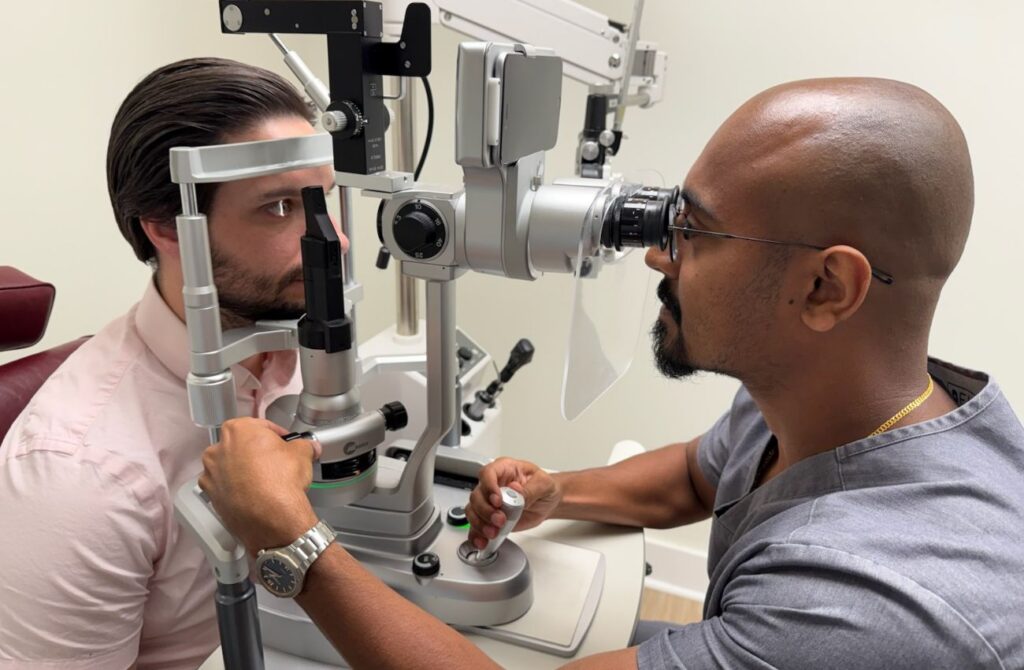
Dr. Ormando recommends baseline examinations around age six and again around age twelve. A full exam can evaluate clarity, focusing, eye coordination, alignment, and eye health. It can also identify amblyopia, sometimes called lazy eye, while the visual system is still developing and treatment has the best chance to help.
School screenings are valuable, but programs and testing conditions vary. A screening may flag a distance-vision problem; it is not designed to replace a comprehensive examination or establish a detailed baseline.
“Unless the school screening is amazing, and sometimes they're not, it's important to have that baseline exam.”— Dr. John Ormando, in an interview with Main Line Parent
Stellest changes the goal from correcting myopia to slowing it
Traditional glasses make distant objects clear, but a standard lens does not try to slow the eye growth associated with worsening myopia. Stellest lenses are designed to do both: provide clear central vision and create a treatment signal intended to slow progression. For a child, the routine feels like wearing ordinary glasses.
“It's the first of its kind. There's laser surgery once you're in your 20s, but there's never been anything to prevent this before now.”— Dr. John Ormando, in an interview with Main Line Parent
“There's zero pain in this process. You let the lens do the work. There's no eye drops, no anything like that.”— Dr. John Ormando, in an interview with Main Line Parent
The treatment window does not stay open forever
Myopia-control treatment is most useful while a child's eyes are still growing. Dr. Ormando describes the strongest window as roughly ages four through eleven; by the mid-teens, much of that opportunity has passed. Earlier intervention is not about chasing a perfect prescription. It is about limiting how high the final prescription becomes and reducing the long-term eye-health risks associated with higher myopia.
“I don't understand why there isn't an enormous awareness drive around this. It's becoming an epidemic.”— Dr. John Ormando, in an interview with Main Line Parent
Cost should never be the reason a child goes without
Vision-plan coverage for Stellest is growing, but benefits vary. Ardmore Eye & Optical can help families understand coverage and discuss CareCredit when a plan does not cover the full cost. The practice's position is simple: begin with the care a child needs, then work through the practical options with the family.
“We will deal with any situation. We want everyone to be able to have this lens.”— Dr. John Ormando, in an interview with Main Line Parent
Questions parents ask
- At what age should a child have their first eye exam?
- Dr. John Ormando recommends comprehensive baseline exams around age six and again around age twelve, even when a child has no obvious symptoms. Earlier care may be appropriate when a parent, pediatrician, or teacher notices a concern.
- How can I tell if my child is nearsighted?
- Children may squint, sit close to screens, or struggle to see across a classroom, but they may show no clear sign at all. As Dr. Ormando told Main Line Parent, a child has no baseline for comparison and may assume everyone sees the same way.
- What is a Stellest lens and how does it slow myopia?
- Stellest is a spectacle lens designed to correct vision while slowing the progression of childhood myopia. Dr. Ormando describes it as a painless approach: the child wears glasses and lets the lens do the work, without drops.
- Is myopia management covered by insurance?
- Coverage varies by vision plan, although coverage for Stellest is growing. Ardmore Eye & Optical can review plan benefits and CareCredit options so cost is not the reason a child goes without recommended care.